


Letitia Flannel Plant (Verbascum)
Original price was: $12.79.$8.95Current price is: $8.95.
- Quality Products, Quality Service
- Unbeatable Quality, Unbeatable Value
- Prompt service, every time.
- Have the best deals

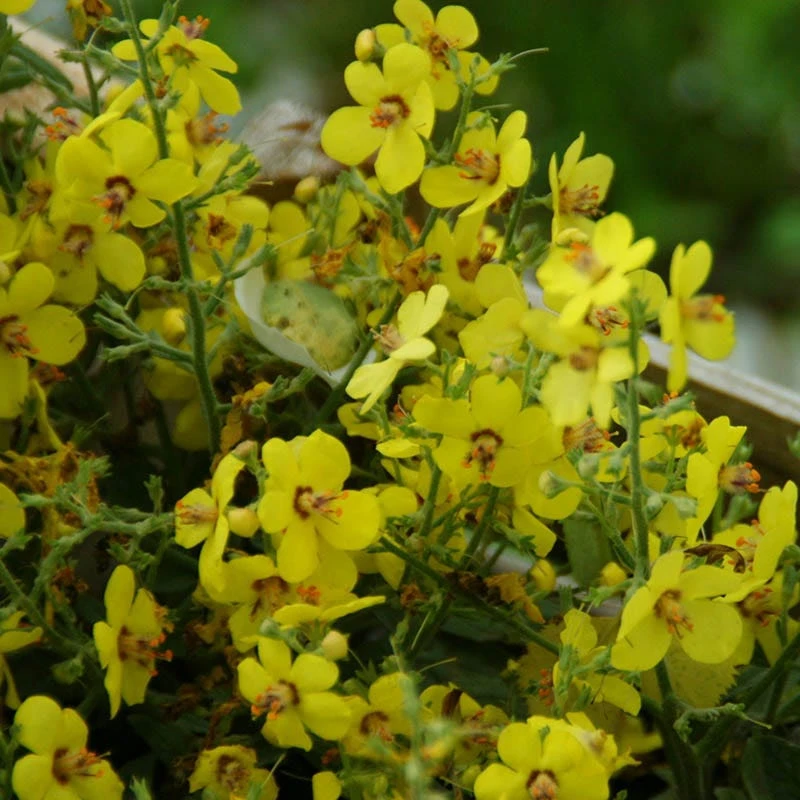
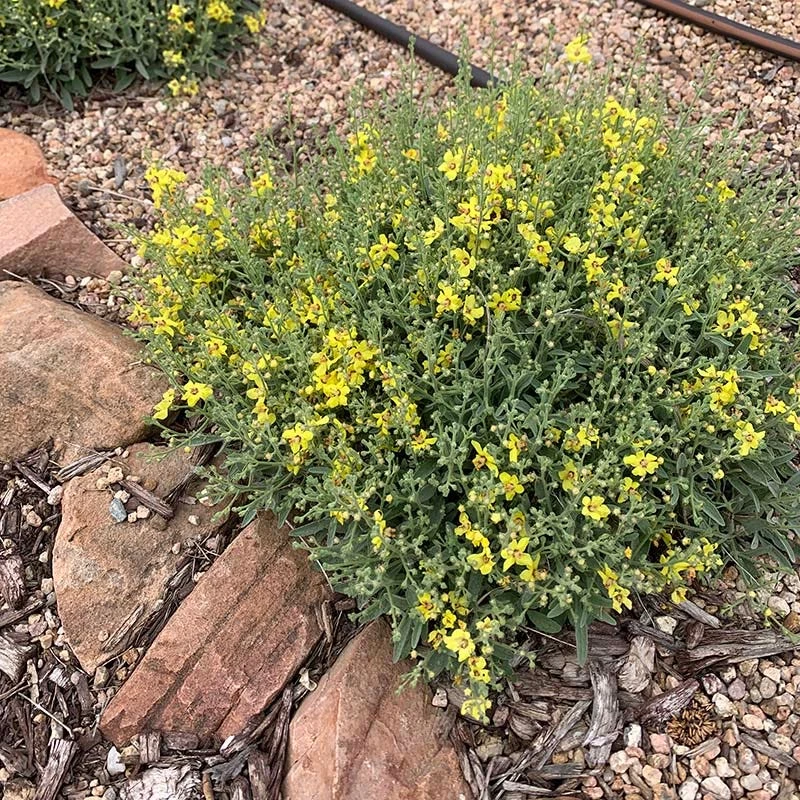
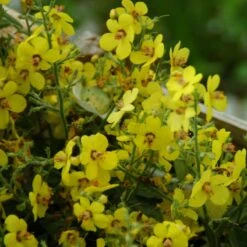
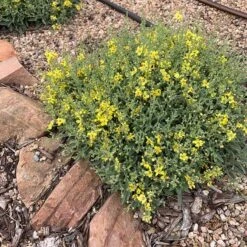
• Verbascum x ‘Letitia’ (Flannel Plant) is a delightful globe-shaped perennial with masses of bright yellow flowers appearing in May and continuing into summer
• ‘Letitia’ thrives in full sun and partial shade adding a pop of colorful beauty in those tricky low-light areas of your garden
• Red to purple eyes at the center of each blossom help butterflies and other pollinators find their way into every flower
• Deer and rabbit resistant, this uniform grower looks fantastic when planted en masse and is great for rock gardens, along walkways, and in mixed perennial beds
• A Plant Select® selection and a Royal Horticultural Society’s Award of Garden Merit recipient
Description
Especially easy to care for, Verbascum x ‘Letitia’ (Flannel Plant) is rewarding for beginners and seasoned gardeners alike. It is a charming addition to any garden, boasting a unique blend of characteristics from its hybrid origins. This chance cross between V. dumulosum and V. spinosum was discovered by W.K. Aslet at the Royal Horticultural Society Gardens in 1966, and named in honor of his wife, Letitia. The plant was awarded the Royal Horticultural Society’s Award of Garden Merit. In 2024 it joined the Plant Select® assortment due to its remarkable hardiness and ability to thrive in xeric gardens.
From May to July, ‘Letitia’ fills the garden with an abundance of bright yellow flowers on uniform, globe-shaped clumps of gray-green foliage. Its compact and predictable growth habit looks excellent in both manicured landscapes and more naturalistic garden designs, as well as mass plantings. Its small size makes it perfect for rock gardens, edging walkways and container plantings. Try it with Dalea purpurea (Prairie Clover), Echium amoenum (Red Feathers), or Penstemon xylus (Tushar Bluemat Beardtongue).
Good for elevations up to 7200 feet.
Trim to shape in spring and deadhead flowers with a quick shear to keep ‘Letitia’ blooming longer. Do not remove the dead leaves over the winter, even if they look a little untidy. They are protecting next year’s buds. The leaves will fall off on their own in the spring when the buds begin to grow. Because it is a chance cross between two species, the plant is sterile and will not propagate from seed.
Be the first to review “Letitia Flannel Plant (Verbascum)”
Related products
Perennials
Perennials
Perennials
Armeria | Sea Thrift
Perennials
Aquilegia | Columbine
Perennials

Perennials
Reviews
There are no reviews yet.